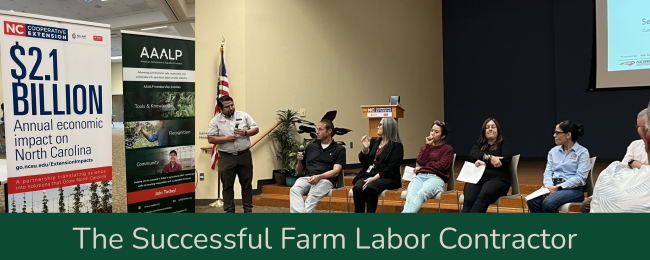
In October, AAALP co-hosted a workshop with North Carolina Cooperative Extension Services to explore what it takes to build and sustain a successful farm labor contracting (FLC) business. FLCs play an increasingly important role in the U.S. agricultural labor sector and in economic development in origin countries such as Mexico and Guatemala. Yet they operate in a complex environment shaped by shifting regulations, labor demands, and compliance expectations.
Understanding the Changing Landscape
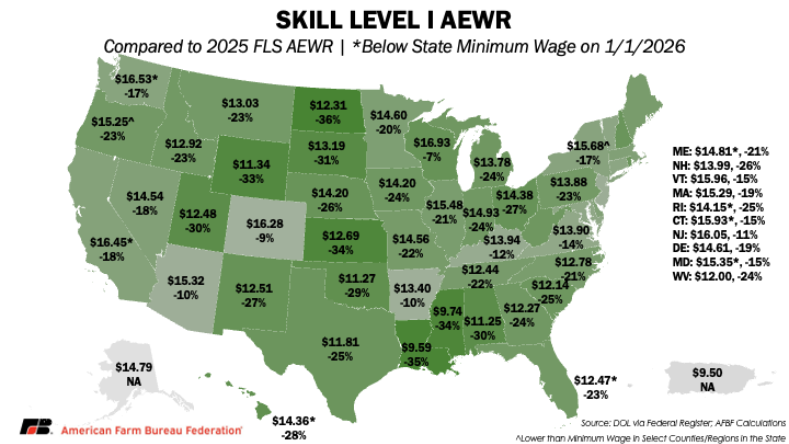
One of the most significant recent regulatory changes is the Adverse Effect Wage Rate (AEWR)*. Per the US Department of Labor, the AEWR sets a minimum wage for U.S. and foreign H-2A temporary agricultural workers “to ensure their employment does not negatively affect the wages of similarly employed domestic workers”. The AEWR will now be calculated using the Bureau of Labor Statistics (BLS) Occupational Employment and Wage Statistics (OEWS) rather than the discontinued USDA Farm Labor Survey.
This change has major implications for both workers and employers. FLCs must stay up to date on the new methodology to correctly recruit, manage, and compensate for their workforce in compliance with federal and state rules, including the differences between skill levels required of specific positions.
Collaboration Across Agencies
Representatives from North Carolina government agencies were present including Labor, Commerce, Health, and Agriculture, joined the workshop to answer questions, offer resources, and learn about AEWR and the challenges and perspectives of FLC attendees.
The NC Department of Commerce, for example, provided guidance on common challenges in H-2A job orders and descriptions, and even volunteered to continue assisting businesses through their dedicated inbox: H2A.joborders@commerce.nc.gov.
NCDOL reminded attendees of the importance of registering migrant housing as early as possible and shared useful resources:
- Migrant Housing Registration
- Registration Instructions
- Inspector Contact Information
- Registered Sites and Certification Status
Other service providers—including Kinston Health, Southeast Non-Profit Housing, National Center for Farmworker Health, and several community partners—were on hand to share information on safety, housing, and worker health.
Building Stronger Businesses
“Un contratista exitoso no solo cosecha ganancias, sino que también cosecha equipos de trabajo fuertes, mayor productividad y éxito compartido.”
— Cintia Aguilar, NC State Extension
Cintia Aguilar, Educational Programs Developer and Manager, NC Extension, led a dynamic conversation on productivity and compliance strategies while AAALP Lead Nikki Enersen facilitated peer exchanges that captured the voice and needs of the contracting community. Joe Martinez, CEO of CIERTO, delivered the keynote address, emphasizing that companies investing in transparency, communication, and strong HR practices hold a comparative advantage—one built on responsibility and trust with workers and clients.
Looking Ahead
AAALP is eager to continue partnering with organizations like the NC State Extension to host learning exchanges and provide practical information and training for FLCs and recruiters. These dialogues strengthen the foundation of a professional, ethical, and productive labor contracting sector.
Do you want to host an event or learn more about AAALP? Send us a message info@aaalp.org.